Showing posts with label Author Interview. Show all posts

Saturday, September 27, 2014

Feral Blog Tour - Interview with Holly Schindler


Your new book, FERAL, was released on August 26.  Can you tell readers a bit about it?
The Lovely Bones meets Black Swan in this haunting psychological thriller with twists and turns that will make you question everything you think you know.

It’s too late for you. You’re dead. Those words continue to haunt Claire Cain months after she barely survived a brutal beating in Chicago. So when her father is offered a job in another state, Claire is hopeful that getting out will offer her a way to start anew.

But when she arrives in Peculiar, Missouri, Claire feels an overwhelming sense of danger, and her fears are confirmed when she discovers the body of a popular high school student in the icy woods behind the school, surrounded by the town’s feral cats. While everyone is quick to say it was an accident, Claire knows there’s more to it, and vows to learn the truth about what happened.

But the closer she gets to uncovering the mystery, the closer she also gets to realizing a frightening reality about herself and the damage she truly sustained in that Chicago alley….

FERAL’s gripping story is filled with heart-stopping twists and turns that will keep readers guessing until the very last page.
FERAL takes on a different subject matter and genre than your past books.  What inspired you to write a YA thriller?
You’re right—FERAL is quite different from my previous releases (a YA literary problem novel, a YA romance, an MG contemporary realistic read).  I’m a serious fan of vintage movies—especially Hitchcock.  That really helped shape FERAL, which is a psychological thriller, in the classic sense. 
Like psychological thrillers, FERAL features mystery, horror, and paranormal elements, but the emphasis is on the “psychological” rather than thriller / action.  The novel features a Hitchcockian pace and focus on character development (here, we’re exploring the inner workings of the main character, Claire Cain). 
Essentially, every aspect of FERAL is used to explore Claire’s inner workings—that even includes the wintry Ozarks setting.  The water metaphor is employed frequently in psychological thrillers to represent the subconscious, and in this instance is incorporated in the form of a brutal ice storm (that represents Claire’s “frozen” inner state).  The attempt to untangle what is real from what is unreal (another frequently-used aspect of the psychological thriller) also begins to highlight the extent to which Claire was hurt in that Chicago alley.  Even the explanation of the odd occurrences in the town of Peculiar offers an exploration into and portrait of Claire’s psyche. 
Ultimately, FERAL is a book about recovering from violence—that’s not just a lengthy or hard process; it’s a terrifying process, too.  The conventions of the classic psychological thriller allowed me to explore that frightening process in detail. 
Can you talk a bit about your road to being published?  How do things change once you’re an established author?
My road to the first publication was really long: it took seven and a half years of full-time effort to land my first deal. 
My first two books (both YAs) were with a smaller house.  I actually handled the first two deals myself; shortly thereafter, I signed with an agent who wanted to represent my MG. 
I know most people assume an agent is a magical creature who can instantly open doors in the publishing world.  In reality, it took my own agent a year and a half to sell my MG (THE JUNCTION OF SUNSHINE AND LUCKY, which released with Dial / Penguin earlier this year).  At that point, I knew I wanted to bring the agent in on the rest of my work—including the YAs.  We agreed that it was time to seek a larger house to publish the YAs as well…But even with an agent and two YAs (one of which was critically acclaimed, having earned a starred review and several awards) on my side, it took a year to sell my third YA, FERAL, to HarperTeen. 
When I started out, I assumed that selling the first book would change everything.  That once I’d inked the first contract, I’d be “in” the publishing world, and my work would be handled differently.  Not so.  Just as the world doesn’t magically change by signing with the agent, the world doesn’t change once you’ve sold a few books, either.  It’s still a process of submission and rejection. 
That’s an important distinction, though: the PROCESS remains the same.  Am I the same person I was when I jumped into my pursuit of publication?  No.  I know myself as an author far better than I did when I was starting out.  I know what I want my books to say.  And that makes the process far less scary.  I also don’t have the same approach to finding a publishing house that I did when I was seeking my first book deal.  I don’t just want my book to be accepted by a house, I want my book to find the RIGHT house, the right editor who recognizes and connects with what I’m doing. 
What are five books that you would suggest every teen read?
1.   CATCHER IN THE RYE – Salinger.  It’s considered, by some, to be the first YA novel written.
2.   SPEAK – Anderson.  I consider it a seminal work in contemporary YA literature.
3.   ELSEWHERE – Zevin.  My favorite YA read.
4.   TO KILL A MOCKINGBIRD – Lee.  You’ll probably get this one assigned to you in class—I did.  And it was hands-down my favorite high school read.
5.   A book outside of your usual genre of preference.  I think it’s important to move outside of your comfort zone.  Reading tastes are somewhat like food preferences—a lot of it’s based on trial and error and multiple exposures.  Just because you didn’t much care for literary reads a few years ago doesn’t mean you won’t like them now.  Give a new genre a shot, keeping an open mind.
What’s next for you, any new books in the work?
Youbetcha!  I’m always working on something new…In fact, I recently finished both my next YA and MG, and I’m working on branching out into new genres.  Be sure to follow along with me on Twitter: @Holly_Schindler and facebook.com/HollySchindlerAuthor to keep up to date with the latest news!

 
Holly Schindler is the author of the critically acclaimed A BLUE SO DARK (Booklist starred review, ForeWord Reviews Book of the Year silver medal recipient, IPPY Awards gold medal recipient) as well as PLAYING HURT (both YAs). 

Her debut MG, THE JUNCTION OF SUNSHINE AND LUCKY, also released in ’14, and became a favorite of teachers and librarians, who used the book as a read-aloud.  Kirkus Reviews called THE JUNCTION “...a heartwarming and uplifting story...[that] shines...with vibrant themes of community, self-empowerment and artistic vision delivered with a satisfying verve.” 

FERAL is Schindler’s third YA and first psychological thriller.  Publishers Weekly gave FERAL a starred review, stating, “Opening with back-to-back scenes of exquisitely imagined yet very real horror, Schindler’s third YA novel hearkens to the uncompromising demands of her debut, A BLUE SO DARK…This time, the focus is on women’s voices and the consequences they suffer for speaking…This is a story about reclaiming and healing, a process that is scary, imperfect, and carries no guarantees.”

Schindler encourages readers to get in touch.  Booksellers, teen librarians, and teachers can also contact her directly regarding Skype visits.  She can be reached at hollyschindlerbooks (at) gmail (dot) com, and can also be found at hollyschindler.com, hollyschindler.blogspot.com, @holly_schindler, Facebook.com/HollySchindlerAuthor, and hollyschindler.tumblr.com

FERAL Trailer:
Rafflectopter form for a giveaway of a signed copy of FERAL (running from Sept. 27- Oct. 13):

Monday, February 25, 2013

Snark and Circumstance Blog Tour

Today I'm welcoming author Stephanie Wardrop, whose new book Snark and Circumstance is out now! She's going to talk a bit about the media portrayal of teen girls. It's a topic that I've become more interested and aware of in my counseling work, and with the growing popularity of YA I think it's an important one.

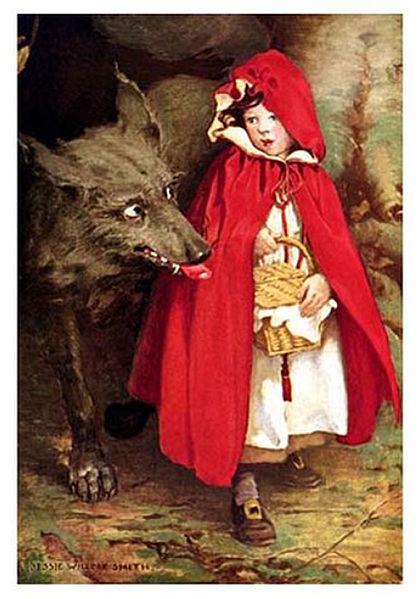
1911 illustration by J. W. Smith, http://commons.wikimedia.org/wiki/File:Little_Red_Riding_Hood_-_J._W._Smith.jpg
It seems that more and more of late, the media portrays young women in two ways –as Victims or Vixens.  And neither one is even remotely empowering.

Of course, girls have been seen as victims since at least the days of the Brothers Grimm or whoever created the timeless lesson in Little Red Riding Hood that girls who stray from the proscribed path will be eaten by wolves.  (And in the original, non-Disneyfied versions, the lesson is also that they deserve to be).


Young female victims abound in the news right now.  There’s the unnamed  victim survivor of a gang rape at a Steubensville, Ohio party and a world away another young woman was gang raped on a bus in India.  She did not survive, but hopefully the lurid attention drawn to the case will alter laws and consciousness about such crimes and the people who commit them.  Radio, TV, and news outlets are also currently discussing “revenge porn”, or the proliferation of compromising videos and photos of trusting young women posted by ex-boyfriends on Facebook and the internet to delight other scummy young men and humiliate their former flames.  And even famous girls can be victims, we learned, in the brief media frenzy about a month ago that resulted from a report that Ariel Winter of the sitcom Modern Family was removed by authorities from her real family surrounding allegations of mental and physical abuse.
So how can we also, paradoxically, see young girls as predatory, as dangerously sexy little vixens on the prowl for unsuspecting men? Because it’s the logical flipside to the Little Red Riding Hood story (a girl punished for straying) and to this day the most popular adult women’s Halloween costume is a sexified Little Red.  


Reality TV has brought us a horde of frightening, vampirous young women scarier than the ones who attack Jonathon Harker in Dracula.  There are the Teen Moms, who just keep breeding without remorse, and the Bad Girls and freaky Housewives.  Even Nickelodeon’s Teen Nick Channel has bought a ticket on the vixen express.  Once girl-empowering shows like iCarly and True Jackson, VP have been replaced by a show debuting this week called Life with Boys.  The name says it all.  Carly and True and their friends had plenty of other concerns besides boys, but the two fourteen-year-olds on this new show inform us that their boys are their number one concern because – duh! – they’re fourteen-year-old girls.

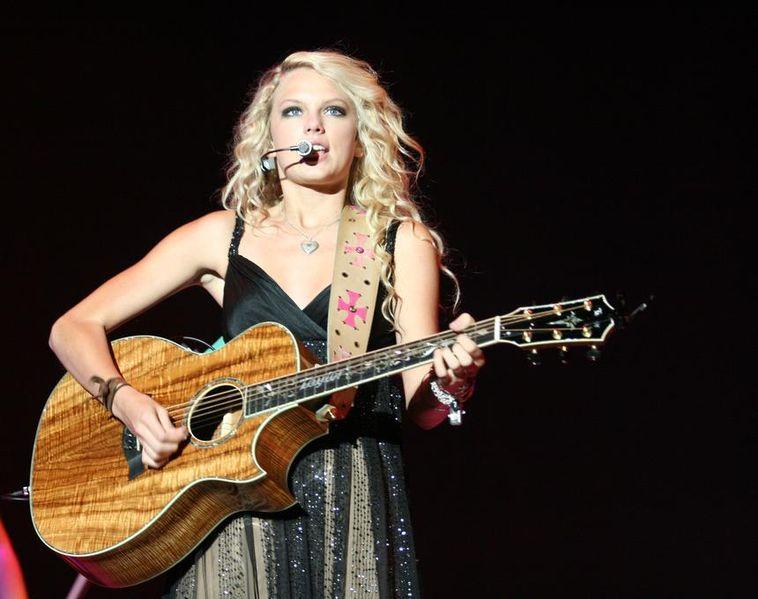
http://commons.wikimedia.org/wiki/File:Swift,_Taylor_(2007)_cropped_2.JPG

Neither designation, victim or vixen, is going to get any girl anywhere.  And that’s why we need YA novels.  They seem to be the only place where a girl can see a vision of herself that is in any way realistic or worthy of aspiring toward.  Outside of the YA novel, the best we can look to might be Taylor Swift, who could be America’s Sweetheart because she manages to embody both the victim and vixen roles at once.  

Her songs chronicle her victimization at the hands of numerous perfidious suitors or clueless boys who could not see her value (and since most of us were “in the bleachers” and not the “cheer captain”, we can relate).  But her list of romantic partners is long and checkered, and a less charitable person could say she just might, like Sylvia Plath’s “Lady Lazarus”, “eat men like air.”  And then, like Plath, write something really nasty about her latest morsel.  (You’re a great songwriter, Taylor, and we come from the same town, but I worry about you.)


So, young women of America and beyond, I urge you:  Keep reading.  And be assured that you can be more than what’s presented to you by most media outlets.  The most real young women are not on reality tv.  They’re on the pages of books.

Tuesday, January 22, 2013

Author Guest Post: Tracy Deebs

Image from author's website
First of all, thanks so much for having me—and for giving me such a great topic to write on.

I think young women are playing a totally kick-ass role in dystopians today and I am absolutely thrilled to see that this is so.  I’m sure this is helped along by the fact that so many strong, wonderful women are writing dystopian novels right now, so of course they are creating strong characters of both sexes who meet challenges instead of shrink from them.  But I also think that the female, dystopian heroine is simply, finally, having her day.  We’ve read/seen dystopians with male heroes (Anthem, Brave New World, 1984, Star Wars) for decades and while I love them, I do think it’s kind of fun to see things from an alternate perspective, as well.  With that in mind, I thought I’d make a list of my favorite female dystopian heroines of the last few years, and see what you guys thought of it 


  1. Katniss from the Hunger Games—This, I’m sure, is no surprise to anyone.  Here’s a girl who has never aspired to be a revolutionary, never aspired to do anything more than keep her family safe, who somehow manages to survive the most dangerous competition on earth.  And, not only to survive, but to somehow find love in the midst of a society gone terribly, terribly awry.  Though I’m a Gale fan, I still admire everything Katniss is able to do, as well as her ability to see that the new government was leading them right back down the same path that was taken by the government she’d worked so hard to bring down.

  1. Saba from Blood Red Road—Like Katniss, Saba isn’t your typical YA female character, but I fell in love with her in the first chapters of the book.  She, too, never meant to be a hero.  She sets off to find her twin brother, who was kidnapped right in front of her, and along the way she learns a lot of truly terrible things about the world in which she lives.  And while she doesn’t deliberately set out to change them—her quest is to find her brother—she can’t overlook the bad that’s happening and changes things anyway.  She’s strong and smart and, like Katniss, above all a survivor in a world that could so easily crush her.

  1. Beatrice from Divergent—I, like a lot of others, love Beatrice.  She’s brave and smart and strong and insecure and scared and determined all at the same time.  What’s not to like?  But seriously, she’s a really interesting character, one who—like the others—does what has to be done no matter the personal cost.  That’s a thing in my mind, the ability to set self aside in order to do what’s right, even if it means you end up dying .  

I love these three heroines and think they are exceptionally strong, well-written characters and I really enjoyed (and continue to enjoy) reading about them.  But when I wrote Pandora, my main character in Doomed, I wanted to do something a little different.   I wanted there to be nothing textraordinary about her at the beginning of the book—I wanted  her to be just a regular girl who is thrust into extraordinary circumstances.  Katniss was always incredible with a bow and already knew how to survive in bleak circumstances.  Beatrice was Divergent.  Saba was incredibly strong.  But what would happen if a girl who really was just completely ordinary, who lived in the world we live in today, ends up thrust into a major quest to save the world as she knows it.  Would she rise to the occasion?  Would she falter?  What mistakes would she make?  


The great thing about women in Dystopian stories today is there is no one, right character.  Authors have created all kinds of different worlds and all kinds of different heroines to live in these worlds.  As a reader and a writer, I couldn’t be more thrilled.


Thanks again to Tracy for taking the time to post here! Here's where you can find her on the web:

Tracy's website
Tracy's blog
Tracy on Twitter


Thursday, December 13, 2012

Author Guest Post: Kim Askew and Amy Helmes

Hi everyone, and thanks, Lizzy, for allowing us to drop by!

Tempestuous and Exposure, the first books in our Twisted Lit series, are modern-day spins on Shakespeare’s “The Tempest” and “Macbeth,” respectively. If you’re not gasping with excitement at the thought, you might be gasping with horror. In addition to being lauded as one of the greatest writers in the history of the English language, old Will manages to occasionally strike terror (or boredom) in people’s hearts, particularly anyone who’s sat through a poorly-performed play or a too-dull classroom lecture devoted to his work. To that end, we’ve decided to write a two-pronged guest blog post explaining why our books will appeal to both the Shakespeare fanatics of the world and the Shakespeare-phobes. Whether you fit into either end of the spectrum (or somewhere in between) we think our books offer a little something for everyone.

I HATE Shakespeare:
We get it. Having to translate all that Elizabethan mumbo-jumbo can be mind-numbing when all you really want to do is escape into a story. And picturing dudes wearing frilly lace collars and shoes with giant buckles? Yeah, uh...no thanks. Our books yank the Bard into the 21st century, taking his universal themes of love, revenge, loyalty, and death and setting them in situations that are thoroughly modern, with characters that are completely relatable. For example, Tempestuous, our take on “The Tempest,” takes place over the course of one night in a shopping mall, but thanks to our fresh spin, it embarks on an entirely new trajectory. We specifically wrote our novels so that you don’t have to be familiar with Shakespeare at all to appreciate them. So go ahead, pretend we never even mentioned him. (And if our books happen to be the “gateway drug” that convince you to give Shakespeare a second look, it’ll be our little secret.)

I LOVE Shakespeare:
Are you the sort of person who dreams in iambic pentameter? Have you seen Baz Luhrmann’s Romeo + Juliet, like, 73 times? Okay, great then, we’re speaking the same language. In that case, you’re likely to pick up on all the subtle Shakespeare references we’ve sprinkled throughout our books, and you’ll probably swoon over our chapter titles, which are direct lines from the Bard himself. Yet because you’re so well-versed in Shakespeare’s most popular plays, our aim in writing the series was to entice you with something a little bit different. To that end, Tempestuous and Exposure (which is our homage to “Macbeth”) aren’t “paint-by-numbers” retellings. Instead, we used Shakespeare as a springboard for our own unique, 21st-century take on the stories. (We’ve added substantially more girl power, for starters.) There’s a good reason we named our series Twisted Lit, and we sincerely hope you’ll give our version of Shakespeare a shot.

Best,
Kim and Amy

Amy (with Kim's dog Macbeth) and Kim
About the Authors
Kim Askew and Amy Helmes are the authors of the Shakespeare-inspired YA series Twisted Lit. Tempestuous will be available on December 18, 2012 and Exposure will be available January 18, 2013 from Merit Press. Kim and Amy been writing together since 2004, when they launched Romancing the Tome, a blog dedicated to their obsession with book-to-film adaptations. For more information on their books, visit TwistedLitBooks.com.


A huge thanks to Kim and Amy for taking the time to stop by! You can check out my review of one of their books, Tempestuous, here.

Monday, November 12, 2012

Author Interview: Janci Patterson

A big thanks to Janci Patterson for stopping by to answer a couple of questions about her debut novel, Chasing the Skip. You can check Janci out at her website, Facebook, or Twitter. You can find information about Chasing the Skip on Goodreads.  


1. Tell us a little bit about your book, Chasing the Skip.

Here's the cover copy: 

Ricki’s dad has never been there for her. He’s a bounty hunter who spends his time chasing parole evaders—also known as “skips”—all over the country. Ever since Ricki’s mom ran off, Ricki finds herself an unwilling passenger in a front-row seat to her father’s dangerous lifestyle. Ricki’s feelings get even more confused when her dad starts tracking seventeen-year-old Ian Burnham. She finds herself unavoidably attracted to the dark-eyed felon who seems eager to get acquainted. Ricki thinks she’s ever in control—the perfect accomplice, the Bonnie to his Clyde. Little does she know that Ian isn’t playing the game by her rules.

2. Can you describe your road to getting published? 

In a word, it was long.  I wrote nine novels over twelve years.  I racked up in excess of a hundred rejections.  Somewhere along the line I learned to revise, and started getting much nicer rejections.  I started working with an agent, and compiled those rejections faster than ever.  

In seriousness, I started writing books because it was what I wanted to do, and I sent them out because I didn't want to reject myself, even though my early work was far from publishable.  But I kept writing, and once my skills were where they needed to be, CHASING THE SKIP sold rather quickly.

3. What qualities do you like most in Ricki?  

Ricki's having a hard time, but she wants very much to make things better, even though she has no idea how.  That doesn't keep her from trying (and failing, and trying again.)  Her persistence is probably my favorite thing about her.

4. What's your favorite book of all time, and has it had any impact on your writing? 

I can't pick just one.  But my favorite book in the contemporary YA genre is SPEAK, by Laurie Halse Anderson.  That book is pure brilliance.  I'd like to say it's had an impact on my writing, but I wouldn't dare suggest that my work even leans toward something as beautiful as SPEAK. Maybe someday.  It's good to always have things to aspire to.

5. Do you have anything new in the works? 

Always.  As a writer, the only thing I can control is whether or not I'm working on the next book.  I have several more books finished, but nothing under contract yet.  And, of course, I'm writing a new one.  The future is always uncertain, but hopefully you'll get to read them all in the not-so-distant future.

Sunday, September 16, 2012

Author Interview with Susan Vaught


Susan Vaught is the author of numerous young-adult novels. Her newest, Freaks Like Us, is out now!

1. Tell us a bit about yourself and your road to being published.

I started writing as soon as I could spell words, and loved creating short stories with big twists, poetry, and creepy, scary things to freak out my friends. I majored in English and Psychology, and ultimately went for my doctorate and psychology, writing “on the side” when I had time. I dabbled with getting published in my 20’s, but went after it seriously in my 30’s with a few friends who were equally serious. One of those friends landed an excellent children’s book agent, Erin Murphy, and gave me a referral. Erin took a chance on me, and quickly sold one of my first projects, a quirky YA piece with a strong southern flavor, to a small press, OnStage Publishing. The editor, Dianne Hamilton, was willing to let that piece be as weird as it wanted it be, and to this day, I love her for that. Erin then sold a three-book fantasy series co-written with the friend who referred me to her, to Llewellyn. After that, she made my first sale to a New York City house. Unfortunately, the book was orphaned by the editor who bought it and then left the company—and Erin had to sell it all over again! The book was Stormwitch, and the editor who bought it was Victoria Wells-Arms, at Bloomsbury. All these years and books later, Erin is still my agent, Victoria is still my editor, and Bloomsbury is still my publisher.

2. You newest book, Freaks Like Us, was released September 4. Choose five words to describe it.

Startling, Poignant, Fast-Paced, Unflinching, Challenging

3. You're a practicing psychologist, how did that impact the way you wrote about mental disorders in Freaks Like Us?

My career in psychology and my work with people who struggle with severe mental illness has given me great respect for their strength and capacity for healing and forgiveness. People looking in from the outside often see the oddity of mental illness, or the seeming humor, or the other-ness, but day to day, what I see is the pain. I wanted to capture that pain, and the strength and hope, too. I hope my years of experience bring an authenticity to the piece that otherwise might be lacking

4. In what ways do you think books like Freaks Like Us can help combat the stigma and stereotypes that go along with mental disorders?

Though mental illness is a player/character in the story, Freaks Like Us isn’t about mental illness, or even living with it. Ultimately, the story is about love, loss, belief, survival, determination—all the things that make human beings human. It’s about growing up, and never giving up. Jason has mental illness, but the illness doesn’t define him. More and more, I would like to see all teens, all people,no matter what their gender, religion, race, preferences, or challenges might be, in stories, getting the chance to star in stories, which are about them and their lives. I hope Freaks moves us all in that direction, of seeing Jason and his friends as people with lives, hopes, futures, successes and failures, first, before mental illness shades those impressions.

5. Do you have anything new in the works?

I’m currently working on a novel told in a series of scary/ghostly short stories, set in a spooky old
asylum (and no, the patients are definitely NOT the scary things!). I’ve had the privilege of working in several such settings, and work in a hospital like that now—the building is closing in on 200 years old, and daily proves itself to be a character in my daily life! Gotta love it. Except when I have to stay there overnight during bad snowstorms. And the power goes off. And I hear the noise outside my office door…

Wednesday, September 12, 2012

Giveaway and Author Interview with Stacy Kramer and Valerie Thomas


A big thanks to Stacy and Valerie for taking the time to answer my questions. Their newest book, From What I Remember is out now! You can check out their website here.

Can you tell the readers a little bit about your new book, From What I Remember?

From What I Remember…is our second novel. Our first, Karma Bites (Houghton Mifflin, 2010) was a middle grade novel. This is our first YA novel and it was a blast to write. Our background is in screenwriting and producing films so we liked the idea of taking a high-concept movie premise, a sort of HANGOVER in high school, and deepening the story and characters and then turning it into a novel. What began as a high-octane, action adventure, turned into more of a character driven romance as we started to fall in love with our characters. We started from the premise of: what would happen if two people who hated each other, who never spoke to each other in four years of high school ended up trapped together for twenty-four hours? That turned into Kylie, a self-professed loner, and Max, a popular golden boy, getting kidnapped and taken over the Mexican border, without their passports, on the day before graduation. They have twenty-four hours to make it back over the border, in time for Kylie to give the valedictorian speech. And during those twenty-four hours, they discover a whole world about themselves and each other, while falling in love. We tried to find the sweet spot between a YA contemporary romance and an action-adventure story. Hopefully, we succeeded.

Can you describe what the writing process is like when working collaboratively?

Before writing books, Valerie and I wrote screenplays together so we’ve been able to finely tune our work habits after years of practice. We start by breaking the story together, either in the same room or on the phone. That is, we come up with the story, character arcs and themes and then plot out the novel from beginning to end. One of us takes the lead, writing the first chapter and then the other one follows, rewriting. We pass chapters back and forth, rewriting each other so much we can’t remember who wrote what and, ultimately, it feels like a singular voice and point of view.

From What I Remember includes topics that aren't frequently included in YA books (i.e. sexual orientation, Autism, cancer, wealth). How did you manage to address all of them while maintaining the humor?

Truthfully, it was a challenge and that’s where the rewriting comes in. We knew the issues we wanted to tackle. It was important to us to not just write a funny, escapist read but to dig a little deeper into some of the issues teens face every day while still trying to live their lives and have fun. The trick was trying to have a lighter touch in order to first and foremost keep our reader entertained and turning the pages. It took a lot of rewriting and rereading to find the right balance.

If you could sit down over lunch/coffee/etc with one of the characters in From What I Remember, who would it be? 

That’s a tough choice. It’s a toss up between Will and Kylie. Kylie could probably be one of our BFF’s. There’s so much of us in her. We’d most definitely bond immediately. And yet, Will would probably a total hoot to hang out with, crazy and fun. Gun to our head, we’ll go with Will, for pure entertainment value.

Do you have any new books in the works (co-authored or otherwise)?

Indeed we do. Thanks for asking. We are currently working on two new YA books (good thing there’s two of us). One is a contemps romance and the other is a thriller, which is a little out of our wheelhouse but we’re having a lot of fun with it. We can’t wait to get our new babies out in the world. Fingers crossed you won’t have to wait too long!


Enter the Rafflecopter below for a chance to win a copy of From What I Remember (US only).


a Rafflecopter giveaway


Tuesday, July 3, 2012

Book Review: Transcendence by C.J. Omololu (an author interview and giveaway, too!)

When a visit to the Tower of London triggers an overwhelmingly real vision of a beheading that occurred centuries before, Cole Ryan fears she is losing her mind. A mysterious boy, Griffon Hall, comes to her aid, but the intensity of their immediate connection seems to open the floodgate of memories even wider.

As their feelings grow, Griffon reveals their common bond as members of the Akhet—an elite group of people who can remember past lives and use their collected wisdom for the good of the world. But not all Akhet are altruistic, and a rogue is after Cole to avenge their shared past. Now in extreme danger, Cole must piece together clues from many lifetimes. What she finds could ruin her chance at a future with Griffon, but risking his love may be the only way to save them both.

Full of danger, romance, and intrigue, Transcendence breathes new life into a perpetually fascinating question: What would you do with another life to live? (From Goodreads)

Genre: Contemporary with a bit of fantasy/mystery/adventure thrown in 

The Best Bits: Plot and characters, for sure. I think that the idea of Akhet, those who can recall their past lives, is an intriguing one. They have access to lifetimes of knowledge, they don't repeat past mistakes, and they have the opportunity to improve the world around them. Of course, not all are good people, some are using their ability to right past wrongs. The way that Omololu began to explore this power was extremely rich, and I'm looking forward to learning more about them in future books. There was also a great contrast between Cole and Griffon. Cole is a typical teen in that she's a bit unsure of herself, and doesn't quite believe in her gift (who wouldn't start to wonder if they were hallucinating?). Griffon has a much deeper understanding of their ability and it played out nicely over the course of the book. 

Nit Picks: I really only have one, and in a way it's one that was probably intentional. I felt like the flashbacks that were relevant to this particular portion of Cole's story were fleshed out, but we only get glimpse's into other past lives. In the interview below, Omololu has written another book in this series. So, I'm looking at it almost like a television series. We get flashbacks that are probably going to come into play in later books and Cole is growing to grow throughout the series. I think it's important for readers to know that, otherwise they are likely to question why only one lifetime was explored while others were shown (but hey, I loved all the flashbacks, just wanted to give everyone the heads up). 

Transcendence
By C.J. Omololu
Published by Walker & Company
336 Pages
Received for Review
Rating: A-

Author Interview
A huge thanks to Cynthia for stopping by and answering a couple of questions!

1. Can you tell us a little bit about your new book, Transcendence?

Transcendence is about a group of people, the Akhet, who remember all of their past lives and a girl named Cole who is becoming one of them. She meets Griffon, a very old Akhet, right as she begins to transition and he helps her along the way. As their relationship deepens, Cole discovers there is a rogue Akhet who is out to avenge a wrong that they feel has been done to them in a past lifetime and Cole quickly learns that she may not be able to trust anyone. A little bit of mystery and a little bit of romance - it was a lot of fun to write.

2. What inspired the Akhet, those who can recall their past lives?

The idea of reincarnation came to me after a friend's teenaged son died suddenly. I couldn't understand why this wonderful boy was gone, and started to think that the only way it would be okay is if he could someday come back again. This led me to do a lot of research on different theories of reincarnation in various cultures - I took what I liked and left the rest. The idea to call them Akhet and associate them with Ancient Egypt happened when I took one of my kids on a field trip to the King Tut exhibit at a local museum. I saw an ankh mirror in one of the displays and remembered the ankh necklace that I wore for years when I was in my teens - it all just seemed to fit beautifully. All of the words - Akhet, Sekhem, Iawi, etc. have roots in Egyptian words that have meaning that makes sense to the plot. For example, Akhet means the place on the horizon where the sun rises and sets, which to me was the perfect metaphor for reincarnation.

3.The reader gets to see a number of different flashbacks for Cole. Have you considered writing another book where she might explore these past lives?

I loved writing the flashback scenes, but there is so much research involved in writing a true historical that it's a bit daunting. We just wrapped up the second book in the series and there is a deeper exploration of some of her past lives in that story.

 4.Your first book for teens, Dirty Little Secrets, was realistic fiction. How did your writing process change for Transcendence, a book which included some fantasy elements?

It's funny, but even though there is a focus on reincarnation, I almost consider Transcendence a contemporary book. As long as you can suspend disbelief in the Akhet, there is no other magic in the book - everything they can do is physiologically possible. Both Transcendence and Dirty Little Secrets required a lot of research on their subjects, but luckily, nobody can come back and tell me that I got the details of reincarnation wrong.

5. Do you have any new projects in the works?

There are always new projects. As I said, we've just finished the second Transcendence book (title still to come) and I really love how it turned out - a continuation of some threads, but a new and exciting story in that world. I'm also working on a few standalone projects on the side - hopefully you'll get to hear about them someday soon.

Giveaway

Alright, I've decided to host a little giveaway. Everyone knows that I loved Dirty Little Secrets, so I thought I'd give that one away as well as her newest release Transcendence! I'll be shipping them through The Book Depository so make sure that they ship to your country (I could also send e-book version, so the winner could potentially choose to go that route). The contest ends in two weeks on July 17, at 11:59 pm EST. 


a Rafflecopter giveaway

Friday, June 24, 2011

Author Interview: Myra McEntire


A huge thanks to Myra for taking the time to answer a couple of questions about her first YA novel, Hourglass. You can check out her blog here: http://myramcentire.blogspot.com/

1.Can you describe Hourglass in a few quick words? It's about a girl who sees what she thinks could be ghosts. They ARE NOT.
 
2.Hourglass is your first book, can you describe your journey to getting published?

I went the traditional route - finished, revised manuscript, queried agents, revised for my agent, agent submitted to Egmont! 
 
3. The book deals with time travel, and the book doesn't shy away from describing the science behind it. What inspired you to write about this topic, and how long did it take you to research it?

I ended up writing time travel because I wanted the book to be different from other paranormal books out there. And  I did a LOT of research - many hours worth. I still do actually! 

4. I found it extremely easy to relate to Emerson, and enjoyed watching her grow as a character while she came to terms with her ability. Were any of her characteristics inspired by people in your life, or personal experiences? Definitely the edit button. Mine is ALSO broken. 

5. I was excited to find out that you've already sold the sequel to Hourglass! Can you give us any hints as to what Emerson will be facing in book two? I wish I could. But I have been forbidden by my publisher! (And they sign the checks, yo!)

Friday, May 6, 2011

Author Interview & Contest: Tracy Deebs

A big thanks to Tracy for stopping by to answer a few questions! You can check out her website here: http://tracydeebs.com/, and her blog here: http://www.tracy-deebs.blogspot.com/


1. Tell us a bit about your upcoming release, Tempest Rising.

Tempest Rising a dark paranormal romance that tells the story of sixteen-year-old surfer, Tempest Maguire, on the cusp of her seventeenth birthday. The daughter of a pro-surfer and a mermaid, she has to make a choice between staying human as she’s always wanted, or becoming mermaid, a fate that she’s dreaded her entire life. But as her birthday approaches, she realizes the choice might not be as simple as she’d hoped (growing gills in English class will do that to a girl).

Add in a love triangle between Tempest and two (very) hot guys, a lot of surfing, an underwater kingdom and a showdown between Tempest and the most evil creature in the sea, and you have a good idea about what Tempest Rising has in store …

2. The book deals with mythological sea creatures, what inspired you to create a novel dealing with this topic?

I’ve loved mermaids since I was three years old and my dad brought me home a VHS copy of Hans Christian Andersen’s The Little Mermaid. I fell in love with the story the first time I saw it and then tortured my parents for the next three years by watching the movie at least once every single day. Seriously. When we moved to California when I was six, I fell in love with the ocean and all things in it (except sharks, which I have a terrible fear of) and when I first learned of selkies many years later (from a Nora Roberts novel, actually) I became just as fascinated with them. So when I told my agent I wanted to write a YA and she answered with, “How do you feel about mermaids …” I couldn’t resist. Tempest Rising is the book I’ve always wanted to write.

3. This is your first YA novel, would you mind sharing a bit about your journey to getting published?

For me, getting published in YA has been a really fabulous experience. I have an amazing agent whose first love is young adult novels. She was incredibly supportive when I told her I wanted to switch genres from romance and try my hand at a YA. Within two weeks, we’d come up with a credible idea, within six weeks I had a full proposal together (eighty pages and a synopsis) and just about three months from the day I told her I wanted to write YA, she sold Tempest Rising to Walker Books :)

Since then, I’ve sold two more YAs to Stacy Abrams, my awesome editor at Walker—one called The International Kissing Club (January 2012) which I wrote with two of my good friends and another that I’m working on now, tentatively called Zero Day, that is a modern day retelling of the Pandora myth, except instead of a box Pandora opens an attachment and brings about technological Armageddon.

4. One of the things that I loved about Tempest Rising was the variety of unique names in the book. How did you decide on those?

I love names and I’m never happy until they are exactly write. Tempest’s name was the hardest for me—she went through a bunch of different names and I had taken to calling her mermaid girl in my own head as I plotted out the story, when I finally decided to just relax and let the name come to me. Almost immediately I heard her voice in my head, along with a demand to be called Tempest. Everything else about her stemmed from her name—including her abilities and the prophecy.

The other names were easier for me to come up with. I had a general idea of what I wanted each character to be, so I looked for names that would suit their personalities/role in the novel.

5. Tempest Rising leaves things open for a sequel, can we expect another book in the near future?

I really hope so. I’ve always conceived of Tempest as a trilogy and the synopsis for the second book, Tempest Unleashed, is under consideration with my publisher as I write this :)

Enter to win an ARC of Tempest Rising by filling out the form below. This is only open to US residents, because it's being shipped straight from the publisher.

CONTEST CLOSED

Friday, February 18, 2011

Author Interview: Suzanne Selfors

Suzanne Selfors is the author of Saving Juliet, Coffeehouse Angel, as well as a middle grade series with Little, Brown. She held a number of jobs before becoming a writer, including children's photographer, video producer, organic flower grower, and marketing director. She lives in Washington. Her newest release, Mad Love, was released January 4. (From Bloomsbury).

Suzanne's website: www.suzanneselfors.com

Mad Love Book Trailer:


1. Would you describe Mad Love in a few words for the readers?


Teen girl meets strange boy who claims to be Cupid. Together, they write a love story.

2. Mental Illness plays a major role in Alice's life, why did you choose to feature it in the book?

I needed Alice's mother to seem larger than life. I needed a reason for Alice's mother to be missing-in-action. I needed Alice to feel alone and unloved. Bi-polar disorder fit all the needs of the plot because it gave my opportunities to shower Alice with affection during her mother's episodes of mania, then to take that affection away during episodes of dark depression.

3. As someone going into the counseling field, I was really impressed with your accurate portrayal of life with mental illness. What research, if any, went into creating those characters?

Lots of research, but also lots of personal experience. In my senior year of college, I went into a deep funk. I couldn't sleep, couldn't eat, was barely functioning. I was diagnosed with severe chronic depression and anxiety. And it took me years to pull myself free of it. Fortunately it hasn't come back. So when I wrote about Belinda's depression, I was drawing from experience.

Also, my father had extreme bouts of mania. He was never diagnosed because he never sought help. He turned to drinking, instead. So I get what it's like to live with someone whose mood swings are unpredictable.

4. Your book also features the myth of Eros (Cupid) and Psyche. What inspired you to use this particular story in Mad Love?

It's a great story. And I love Greek and Roman mythology. But I never quite believed the part of the story where Cupid accidentally shoots himself with his own arrow. I thought, what if he didn't put himself under a spell? What if he really, truly loved Psyche. What could I do with that?

5. Do you have any current projects in the works?

I'm writing my next teen novel, which will be out in 2012. I'm having fun with it. It's a bit of a fairy tale.

A HUGE thanks to Suzanne for answering my questions!

Thursday, October 7, 2010

Guest Post: Lisa Klein & Giveaway

As part of the blog tour for her newest release, Cate of the Lost Colony, Lisa Klein was kind enough to agree to write a bit about one of my favorite genres, historical fiction.

Author Bio: I am a lifelong reader and lover of words who said to myself one day, "Maybe I can write a novel." So in 2001 I sat down and began writing Ophelia, which was published in 2006. By that time I had completed a Ph.D., taught English literature as an assistant professor for nine years, married, had two sons, and finished two nonfiction books. Oh, and read more books than I can possibly recall. But one of my favorites growing up was Gone With the Wind, which I read seven times as a teenager. Thirty-odd years later, I wrote my own Civil War novel, Two Girls of Gettysburg. And the high-school parody of Macbeth that won our class first place in the homecoming skit competition eventually morphed into more sophisticated retellings of Shakespeare: Ophelia and Lady Macbeth's Daughter. I love doing research for my novels and retelling history and Shakespeare's plays from a fresh, female-centered perspective.
I live in Columbus, Ohio with my husband, two teenage sons, a dog and a cat. You can visit my website at www.authorlisaklein.com.

Time Travel that Won’t Leave You Seriously Jet-Lagged, Ill, or Dead

I’ve always loved reading historical fiction, because it took me out of the boring here and now into a place of greater excitement—and often greater hardship. When I was growing up I devoured the Little House on the Prairie books, the Mary Poppins series, books by Maud Hart Lovelace, and later Gone With the Wind and Jane Austen’s novels. (The original ones; not the new zombie ones!) Also, big on my list were biographies of queens, like Elizabeth I, whose life was more amazing than any novel.

What I love about writing historical fiction is the chance to live in another place and time while I am researching and writing the book—and long after, as the memory of a great trip stays with you. Because it was the main character I identified with while reading historical fiction, I try to create strong and interesting heroines—your guides to the world of the past. It’s not always easy, because they need to be believable in their own time, yet relevant to modern readers. For example, Ophelia in her dire situation at the court of Elsinore had few realistic choices in the 16th century, but today she would have many options. So it’s my job to be a bridge, not only so that you can visit the past, but so that the past can come alive in the present.

It’s funny, because I was not crazy about history when I was in school. It was always taught as dates, wars, political events, and the deeds of great men. But when you think of history as people who experienced the above, it comes alive in a new way. History includes women and children as well as men. And if young women can see themselves as part of history—not just as observers on the sidelines—then, then I think it empowers them to think and act in new ways. Somewhere along the line I developed a hunger to know how young women might have been affected by great events in history, such as the battle of Gettysburg or the founding of the Roanoke colony. Now I am a history junkie.

Finally—and this is the only real justification for historical fiction—the past is full of amazing people and occurrences. As an author, I can’t make up stuff that’s any better. As a reader, you learn a thing or two while being entertained. This keeps parents and teachers off your back. They won’t yell at you if you are reading historical fiction.

Reading about the past in fiction is safer than actually living there. You can fight the battle of Gettysburg without getting killed, visit the court of Elsinore without Hamlet stabbing you, and explore Roanoke Island without getting shot full of arrows. Plus, you gotta admit that reading a novel is way more fun than reading a history textbook. If you disagree, I dare you to raise your hand. Right behind me there’s some guy in a doublet carrying a dagger.


Enter to win a copy of Cate of the Lost Colony by filling out the form below. This will be shipped directly from the publisher, and requires a valid US address.


Copyright ©2009-2013 Cornucopia of Reviews. All Rights Reserved.